Learn exactly how Google selects content for AI Overviews, seven proven strategies to get your pages featured, and how to increase brand visibility in AI-driven search environments.

Search has changed. If you've noticed a large AI-generated summary box appearing at the very top of Google search results, you've seen Google AI Overviews (AIO) in action. These AI-generated snippets are now appearing for millions of queries — and they're fundamentally reshaping how users find information online.
The problem? Most businesses are optimizing for yesterday's search. They're chasing traditional blue-link rankings while AI Overviews silently redirect traffic to the handful of sources Google's AI deems most authoritative and well-structured.
Whether you're a business owner, a content marketer, or working with an AI SEO agency, understanding how to optimize content for Google AI Overviews is no longer optional — it's the new baseline for visibility in 2026 and beyond.
In this guide, you'll learn exactly how Google selects content for AIO, seven proven strategies to get your pages featured, and how to increase brand visibility in AI-driven search environments. We'll also cover when it makes sense to invest in AI search optimization tools and how to find the right AI SEO agency for Google AIO.
Google's AI Overview is not simply pulling the #1 ranked page. It is synthesizing answers from multiple sources it considers authoritative, clear, and well-structured. Understanding this distinction is critical.
Google evaluates content through the lens of Experience, Expertise, Authority, and Trust (E-E-A-T). For AIO specifically, pages that demonstrate first-hand experience and subject-matter expertise are significantly more likely to be cited. Generic, shallow content — no matter how well it ranks — rarely makes it into AI Overviews.
Google's AI parses pages looking for clear, extractable answers. Content that uses logical heading hierarchies (H1 > H2 > H3), short answer sentences at the top of sections, and structured data markup is far more likely to be consumed and surfaced by AIO.
A featured snippet pulls one source. An AI Overview synthesizes multiple sources into a coherent answer. This means even pages ranked on page 2 or 3 can appear inside an AIO — if their content answers a specific sub-question with clarity and authority.
This is where AI-driven insights services for SEO agencies become invaluable. They help identify content gaps, track which of your pages are being cited in AIO, and reveal the exact question patterns your audience is using inside AI-powered search.
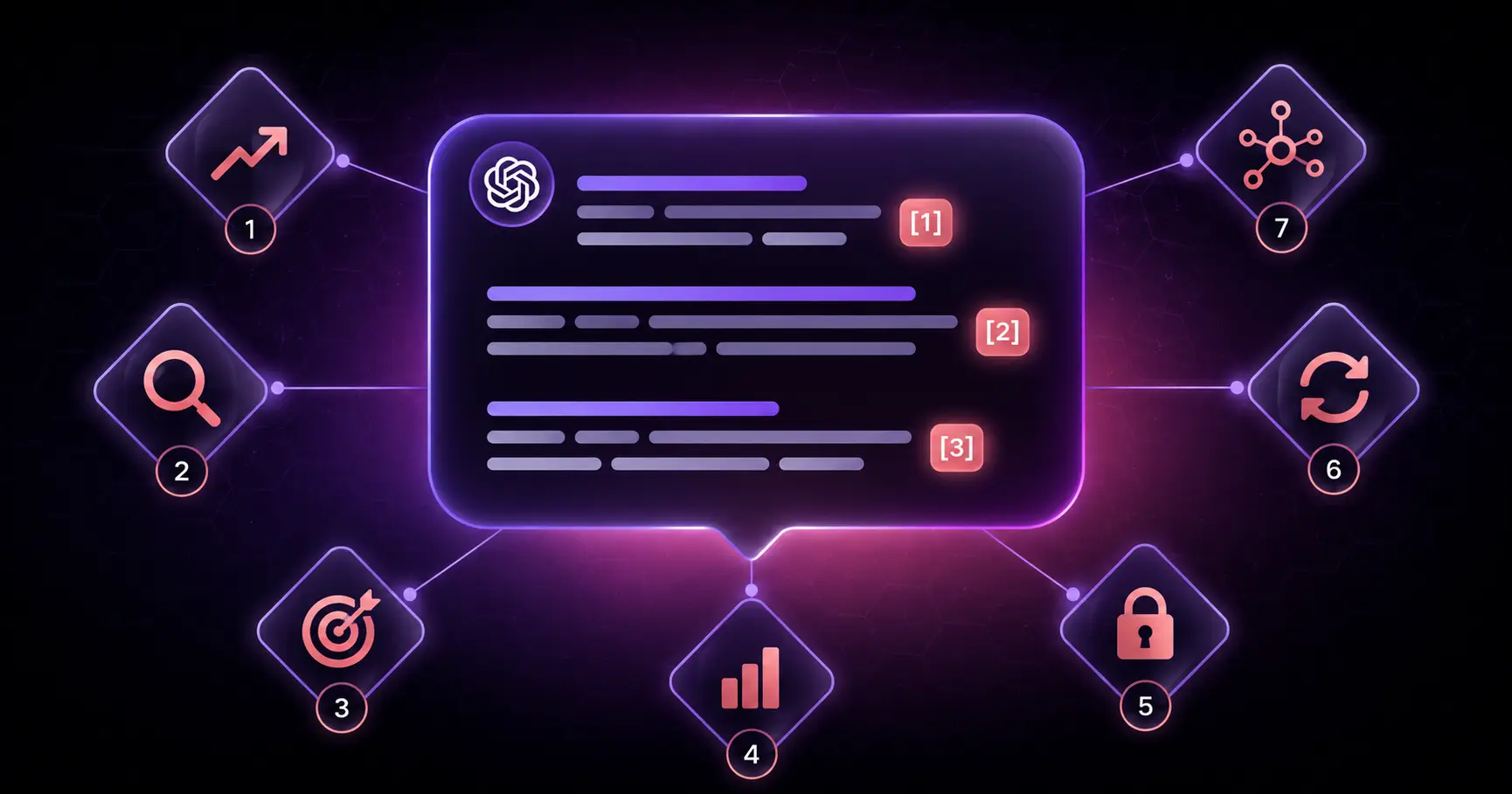
These are not theoretical best practices — they are the specific content signals Google's AI actively looks for when deciding what to include in an Overview.
AIO extraction begins at the top of a section. Open every H2 or H3 with a 1–2 sentence direct answer to the implicit question that heading raises. Then elaborate. This "answer-first" structure mirrors how Google's AI reads and extracts content.
Implement FAQ schema, HowTo schema, and Article schema wherever relevant. Structured data doesn't guarantee AIO inclusion, but it signals to Google's crawlers that your content is organized, machine-readable, and authoritative — all traits AIO favors heavily.
Users searching inside AI-powered tools (Google, ChatGPT, Perplexity, Bing Copilot) phrase queries differently than traditional keyword searches. They ask full questions: "how do I improve my website's AI visibility?" or "why should I use AI search optimization tools for my business?" Write content that mirrors this natural, conversational query style — it dramatically improves your chances of being cited.
A single blog post rarely earns AIO placement. Google's AI favors websites that demonstrate deep, consistent expertise across an entire topic area. Build interlinking content clusters — a pillar page supported by multiple detailed supporting articles — around your core subject matter. This signals to Google that your site is the authoritative hub on the topic, not just a single page with good content.
Slow, poorly structured pages are less likely to be crawled deeply and indexed with full context. Ensure your pages score well on Core Web Vitals (LCP, INP, CLS), are fully mobile-responsive, and load in under 2.5 seconds. Technical health is table stakes for AI visibility.
Dense, unbroken paragraphs are hard for both users and AI systems to parse. Use H2s and H3s to break content into scannable sections. Use bullet points for lists of items, steps, or features. Short, punchy paragraphs of 2–4 lines outperform long-form walls of text when it comes to AIO extraction.
AIO strongly favors recently updated content. A comprehensive guide that was last updated two years ago will often lose its AIO placement to a more current source — even if the older content is technically more thorough. Build a quarterly content review schedule to refresh statistics, examples, and recommendations. Google notices, and AIO rewards it.
Get a free AI visibility audit from our AI SEO agency — no strings attached. Our team analyzes your current content against Google AIO signals and delivers a prioritized action plan.
Optimizing individual pages is only half the equation. To truly increase brand visibility in AI-powered search — not just on Google, but also on ChatGPT, Perplexity, Gemini, and Bing Copilot — you need to think beyond individual URLs and focus on brand-level authority signals.
AI language models are trained on a large corpora of web content. Brands that appear frequently in high-authority publications, industry blogs, press releases, and review platforms are significantly more likely to be referenced by AI tools when users ask relevant questions. A consistent digital PR strategy — earning genuine mentions across trusted sources — is now an essential component of AI visibility.
Google reviews, G2 ratings, Trustpilot profiles, and industry forum mentions all contribute to the trust signals that AI systems use to evaluate brand credibility. For local businesses especially, review volume and recency directly influence how often your brand appears in AI-generated local results.
If you serve customers in a specific region, optimizing for AI-powered local SEO is critical. AI Overviews for local queries (e.g., "best digital marketing agency in Texas") are increasingly pulling from businesses with strong Google Business Profiles, consistent NAP (Name, Address, Phone) data across directories, and locally relevant content on their website.
Whether you're a small business in Mississippi, California, Colorado, Florida, Michigan or a growing enterprise in New York, our top AI SEO agency tailors local strategies to help you appear in AI-generated local results, Google Maps packs, and voice search responses.
Traditional SEO tools — rank trackers, backlink analyzers, keyword explorers — were built for a search landscape that no longer exists alone. Today's AI search optimization tools do something fundamentally different: they monitor how AI systems perceive and reference your brand, not just where you rank in a blue-link SERP.
The leading tools in this category track AIO appearances across thousands of queries, identify which content types and formats are being cited most frequently, analyze your content's E-E-A-T signals relative to competitors, and surface the exact question patterns your audience uses in AI-powered tools. This is AI-driven insights applied directly to your SEO strategy.
For many businesses, especially those operating in multiple markets, the complexity of managing an end-to-end AI visibility strategy across content creation, technical SEO, local citations, and AIO tracking exceeds internal capacity. This is precisely the gap that a specialized AI SEO agency fills.
A dedicated top AI SEO agency brings three things most in-house teams lack: proprietary AIO tracking infrastructure, deep expertise in AI-era content strategy, and the bandwidth to execute consistently across all channels. The ROI calculation is straightforward — visibility in AI Overviews drives qualified traffic that didn't exist in your analytics six months ago.
Not every SEO agency has kept pace with the AI search revolution. Many still operate on 2019-era strategies — chasing keyword rankings without any understanding of how Google's AIO selects, synthesizes, and surfaces content. Finding the right partner matters enormously.
The right AI SEO agency for Google AIO should be able to demonstrate clear expertise in AIO tracking and reporting, a structured approach to E-E-A-T content development, schema markup implementation, content cluster strategy, and local SEO for AI — especially if you serve regional markets across states like Michigan, New Jersey, or Colorado.
Be cautious of agencies that still lead with "we'll get you to page 1" without any mention of AIO strategy, agencies that cannot explain E-E-A-T or structured data, and agencies offering one-size-fits-all packages with no local SEO differentiation. These are signs of an agency that hasn't adapted to the AI-first search era.
Even well-intentioned SEO efforts can actively harm your chances of appearing in Google AI Overviews. Here are the most common and costly mistakes businesses make:
Generic, surface-level content that could have been written by anyone — without specific data, named expertise, or real-world examples — will not be selected by AIO. Google's AI is sophisticated enough to distinguish between content that demonstrates genuine expertise and content that merely contains the right keywords.
Failing to implement FAQ, HowTo, and Article schema is one of the most common technical gaps we see when auditing sites. Schema markup dramatically improves the machine-readability of your content and increases the probability that Google's AI can extract and cite your answers cleanly.
Google AIO is the largest opportunity, but it isn't the only one. Perplexity, Bing Copilot, and ChatGPT's browse mode are all surfacing brand citations at scale. A comprehensive AI search optimization strategy accounts for all of these platforms, not just Google.
Stale content loses AIO placements fast. We've seen pages drop out of AI Overviews within weeks of a competitor publishing a more recent, more comprehensive answer to the same question. Building a quarterly content audit and refresh process is not optional — it's core infrastructure for sustained website AI visibility.
A Google AI Overview is an AI-generated summary that appears at the top of search results for certain queries. It synthesizes information from multiple trusted sources to give users a direct answer without requiring them to click through to individual pages. Google selects sources based on content quality, authority, structure, and E-E-A-T signals.
You can manually search target queries in Google and observe whether your content is cited. For systematic tracking at scale, AI-driven insights tools for SEO agencies — such as those offered by specialized platforms — track AIO appearances across large keyword sets and alert you when your content is included or drops out.
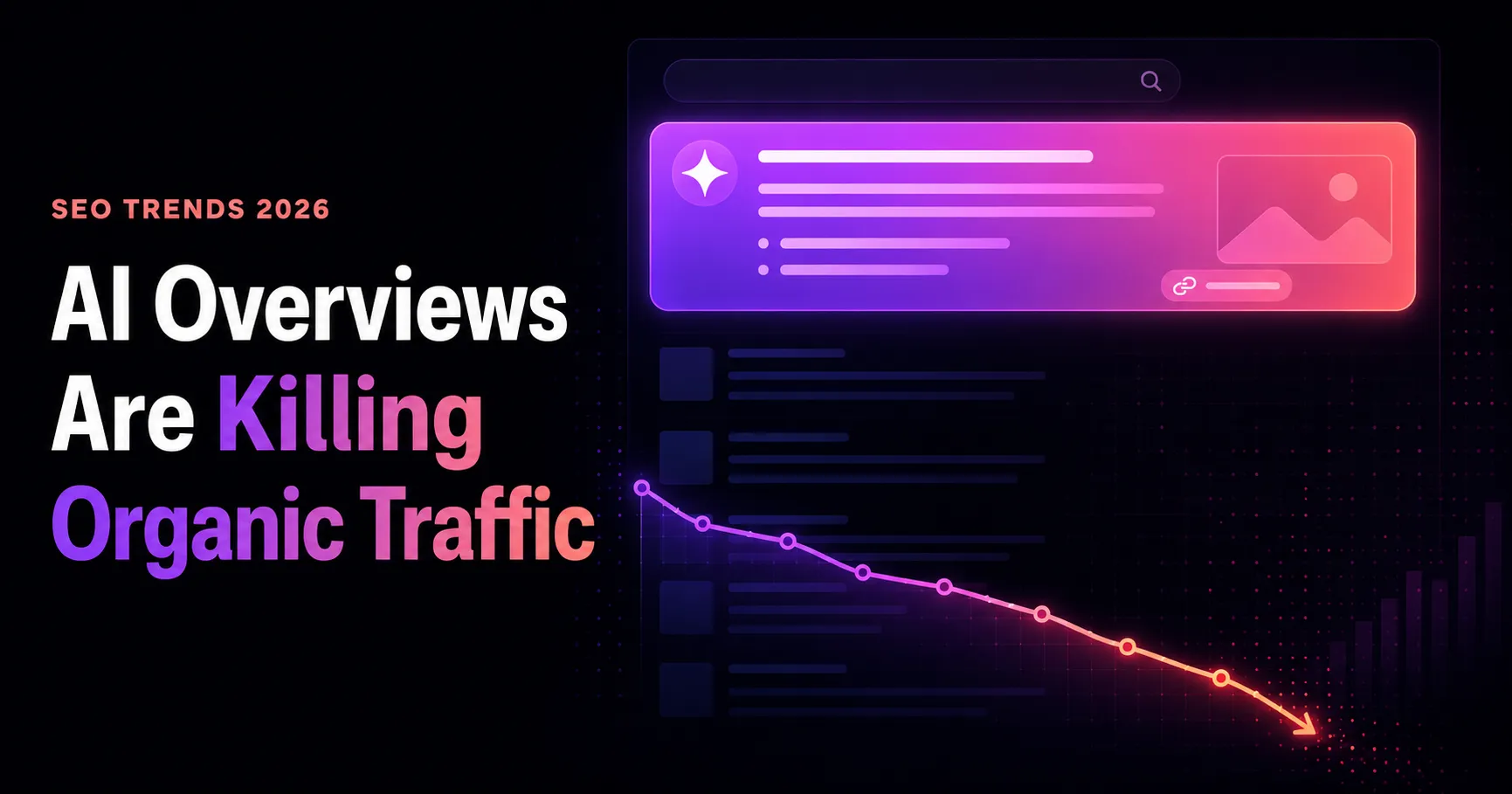
Research suggests that AIO appearances can reduce CTR for some queries, as users find their answer directly in the Overview. However, brands cited in AIO benefit from a significant trust and awareness uplift — users who do click through have higher intent and tend to convert at a higher rate. The long-term brand visibility value is substantial.
There is no fixed timeline. Pages with strong E-E-A-T signals, clear structured content, and proper schema can begin appearing in AIO within weeks of being indexed. Most businesses working with a focused AI SEO agency see measurable AIO appearances within 60–90 days of implementing a dedicated strategy.
It depends on your internal capacity and market complexity. Businesses serving multiple local markets — for example, across California, Florida, and Texas — typically benefit significantly from partnering with a specialized AI-powered local SEO agency. The infrastructure, tooling, and expertise required to execute effectively across multiple regions and AI platforms exceeds what most in-house teams can sustain.
Google's AI Overviews are not a temporary feature. They are the new front door to search. Businesses that adapt their content strategy now — building genuine expertise, implementing structured markup, refreshing content regularly, and monitoring AI visibility across platforms — will compound their advantage over competitors who remain stuck in old SEO playbooks.
The seven strategies in this guide give you a clear starting point: write answer-first content, implement schema markup, build topical authority, keep content fresh, and think beyond keyword rankings to brand-level AI visibility. These aren't complex changes — but they require consistency and the right partner to execute at scale.
Whether you're a local business in New Jersey or a multi-location brand spanning New York, Texas, Michigan, Colorado, Mississippi, Florida, and California — the opportunity to dominate AI-powered search is real and it's available right now.
Ready to get your brand featured in Google AI Overviews?
We audit your content, build your AIO strategy, and track your results — all in one place.
➡ Get Your Free AIO Strategy Session — No Commitment Required
Book a free strategy call with our SEO experts to discuss how we can help your business rank in AI-powered search results.