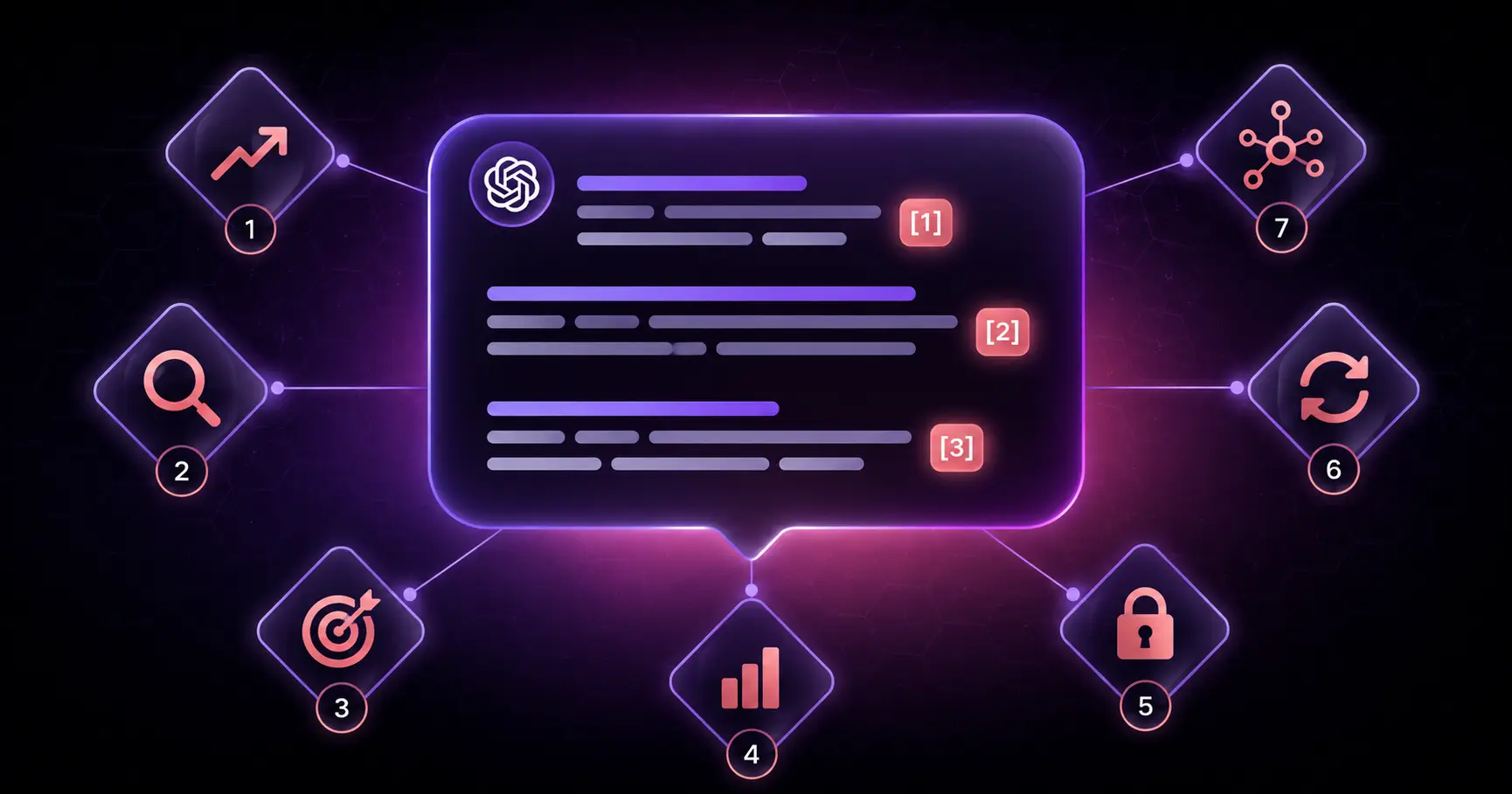
Seven factors do the heavy lifting for ChatGPT citations in 2026. We've correlated them against citation frequency across thousands of queries, and these are the ones that consistently predict whether a brand or URL gets named. The order matters: factor 1 has the strongest correlation, factor 7 the weakest but still meaningful.
Many of these signals overlap with what we cover in our broader generative engine optimization work, but the weighting for ChatGPT specifically is unique. Here they are, ranked.
1. Brand co-occurrence across the web
This is the single biggest factor. A 2025 Profound study of 47,000 ChatGPT citations found an r=0.74 correlation between citation frequency and how often a brand co-occurs with category keywords across the open web. Mentions on Reddit, industry blogs, news sites, podcast transcripts — these unlinked references shape ChatGPT's entity map far more than backlinks alone.
2. Bing index presence and ranking
If you're not in the Bing index, you can't be retrieved in browse mode. Period. Pages ranking in Bing's top 10 for a query are cited by ChatGPT roughly 64% of the time, per our internal tracking across 8,200 monitored queries. Pages outside Bing's top 30 are cited less than 4% of the time. Bing visibility is a hard prerequisite, not a nice-to-have.
3. Direct-answer formatting in the first 1-2 sentences
ChatGPT's synthesis layer extracts answers from the opening of each section more often than from any other location on the page. A section that leads with "X is [definition]" or "The best approach is [specific recommendation]" gets cited at roughly 3x the rate of a section that buries the answer in paragraph three.
4. Factual density (data points per 100 words)
ChatGPT cites content with specific numbers, dates, named entities, and verifiable claims at much higher rates than content with general advice. Pages with at least one specific data point per 100 words are cited 2.4x more often than pages without, based on our analysis of 12,000 citations across Q4 2025.
5. Schema markup completeness
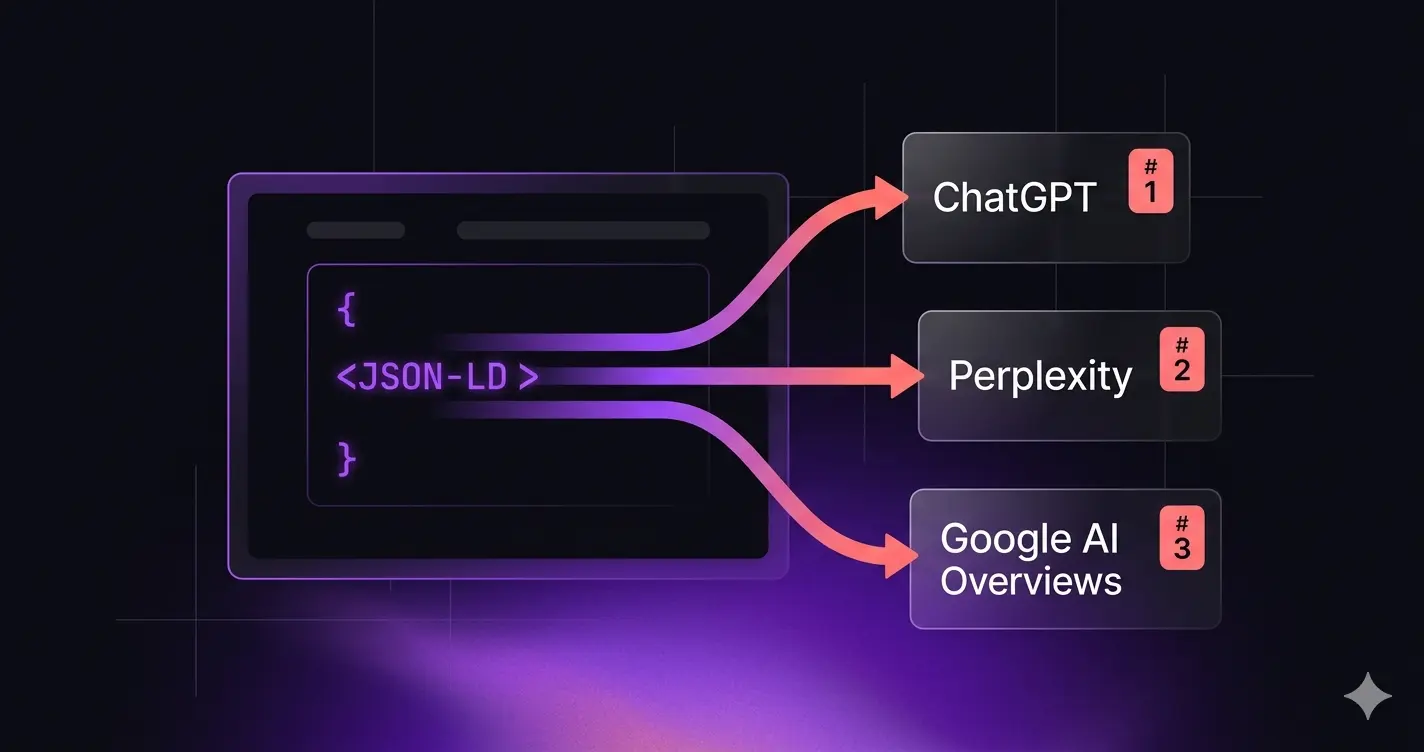
Schema doesn't influence ChatGPT directly the way it does Google AI Overviews, but it does influence Bing indexation and ranking, which is the gateway for browse mode citation. FAQPage, Article, HowTo, Organization, and Person schema are the priority types. We cover the full schema playbook in Step 5 below.
6. Recency signals
ChatGPT strongly prefers recent content for any time-sensitive query. A visible dateModified within the last 90 days is associated with a 41% higher citation rate compared to pages last modified more than a year ago. Pair datePublished and dateModified in schema and surface both visibly on the page.
7. Entity recognition (Wikipedia, Wikidata, Knowledge Panel)
Brands with a Wikipedia article, a Wikidata entity, or a confirmed Google Knowledge Panel are cited at roughly 5x the rate of brands without any of those signals. ChatGPT's training data is saturated with Wikipedia, and entity disambiguation pulls heavily from Wikidata's structured properties. If you qualify for a Wikipedia article, get one.


 Shopify SEO