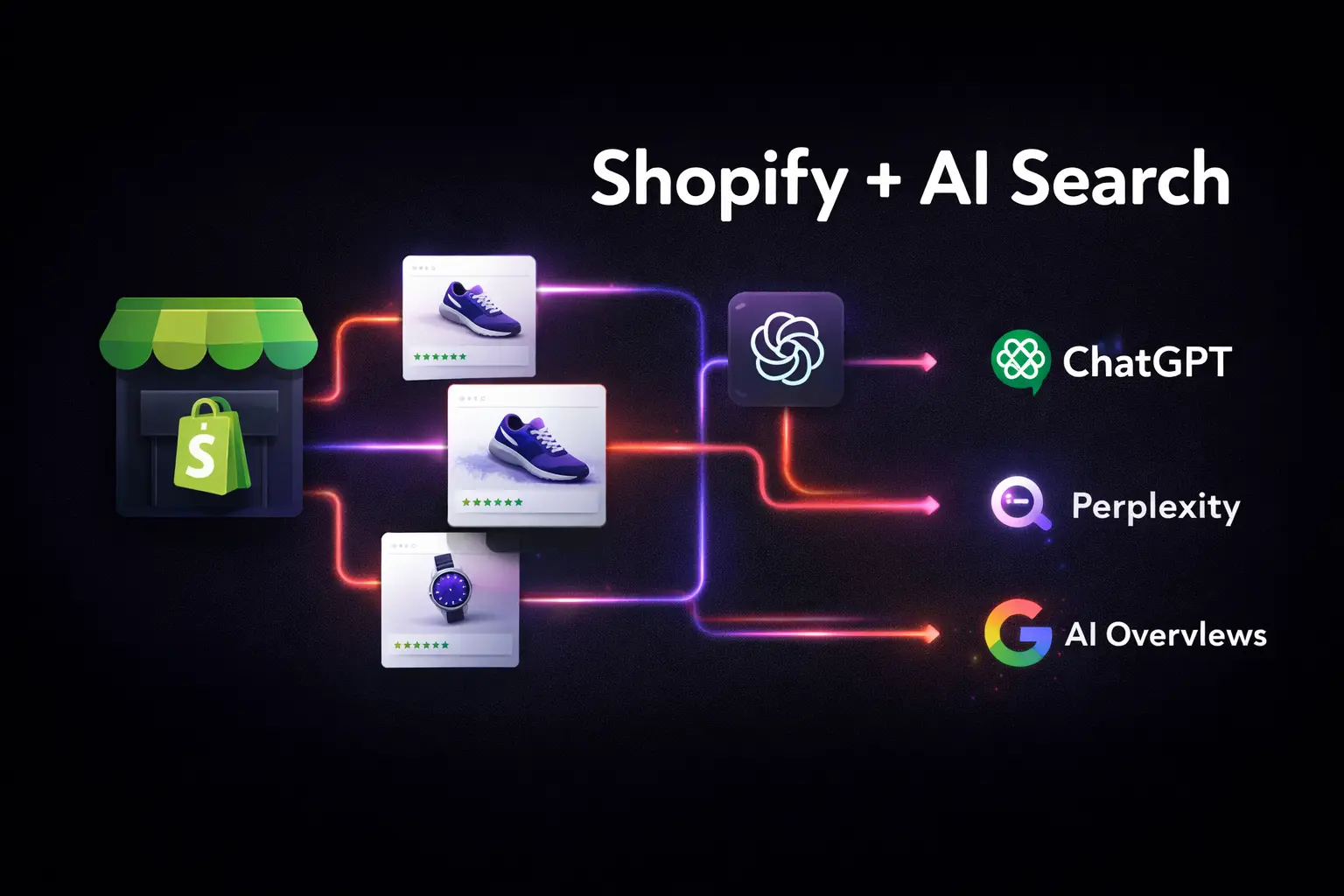
Before you can optimize for AI search, it helps to understand what's actually going on behind the scenes. AI search engines like ChatGPT (in browsing mode), Perplexity, and Google's AI Overviews don't work like traditional search crawlers. They don't just index pages and rank them by keyword match. Instead, they pull information from multiple sources, reason through it, and piece together a recommendation that reads like advice from someone who knows the space well.
Crawling and indexing: what AI sees
Large language models like GPT-4 and Gemini were trained on enormous volumes of web content — product pages, review sites, forums, editorial articles, news outlets. Because of that training, AI systems carry a kind of built-in "memory" of brands, products, and categories, shaped by how often and how credibly those entities show up across the web. Brands that get mentioned frequently on trustworthy, varied sources become baked into the model as reliable entities. Brands with a thin web presence — no matter how good their products actually are — just don't register.
When someone asks Perplexity "what are the best sustainable running shoes?", the system runs a real-time web search, pulls content from sources it trusts, and uses its LLM reasoning to build an answer. The sources it leans on most tend to have strong domain authority, clear product data, third-party validation (reviews, press, side-by-side comparisons), and well-structured content that's easy to parse. That's why our AI Overviews optimization service puts equal weight on on-site signals and off-site authority building.
Entity recognition: becoming a "known" brand
AI systems think in terms of entities — brands, products, people, places — not keywords. For your Shopify store to get recommended, it needs to be recognized as a clear, trustworthy entity with defined attributes. That means your brand name, product names, and core value propositions need to show up consistently and accurately across your own site, third-party sites, review platforms, and publications. If your naming is inconsistent, you've got sparse external mentions, or you're missing structured data, it's harder for the AI to form a confident, positive "picture" of your brand.
Citation logic: how AI picks which brands to name
When an AI recommends a product, it's essentially citing sources it considers credible for that specific recommendation. The signals that drive these citations include: review volume and ratings on platforms like Google, Amazon, and Trustpilot; mentions in editorial content on high-authority sites (tech publications, lifestyle blogs, industry newsletters); comparison and "best of" articles that feature your product alongside established competitors; and how complete and accurate your product schema markup is. Getting a handle on this citation logic is really the starting point for any effective Shopify ChatGPT SEO approach.


 Shopify SEO